
ABOUT US
Our Patrons
Sir David Veness, CBE, QPM
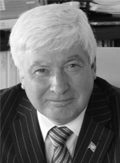 Sir David Christopher Veness, CBE, QPM is a British former senior police officer and United Nations official. David joined the Metropolitan Police Cadet Corps in 1964 and the Metropolitan Police in 1966. He became a CID officer in 1969, and trained as a hostage negotiator a decade later. He became an instructor and then Director of the Scotland Yard Negotiators Course between 1980 and 1987 before being appointed a Police Commander serving with Royalty and Diplomatic Protection until 1990.
He served as Assistant Commissioner for Specialist Operations in the Metropolitan Police from 1994–2005 (heading Special Branch), before retiring from the force to serve as United Nations Under-Secretary-General for Safety and Security until 2008.
After an outstanding police career that saw consistent promotion and recognition – QPM, 1994, CBE, 2000, David received a Knighthood on his retirement from the Police Service.
Dr Peter Morkel
 Dr. Pete Morkel is a native of Zimbabwe and is a graduate of the University of Pretoria where he received his Bachelor of Veterinary Science. Pete has been working full time as a wildlife doctor ever since.
His first real job in the field of wild animal medicine was as head of the Namibian Game Capture Unit based in Windhoek followed by 2 years working as the veterinarian in Etosha National Park. Pete then moved onto become the General Manager for Game Capture and Veterinary Services for the South African National Parks Board, a position that gave him extensive exposure to wildlife health and conservation issues in southern Africa. As the Rhino Coordinator for the Frankfurt Zoological Society Pete managed the Ngorongoro Crater Rhino Project for 6 years. Pete is the Chief Veterinary Officer of the IUCN Species Survival Commission’s African Rhino Specialist Group. His latest work allows Pete the flexibility to travel to participate in many diverse conservation projects ranging from rare rhino relocations to rescue of the Giant Sable.
Michael Laurie CBE
 Michael Laurie CBE trained at the British Military Academy, Sandhurst, prior to being commissioned into the Royal Engineers in 1969. He served as a Military Engineer in the Gulf, Germany and Belize, and in Northern Ireland as an infantry officer. He later transferred to the Intelligence Corps, and served in Germany and Northern Ireland.
Michael was promoted to Brigadier and appointed as Director of the Intelligence Corps in 1994, making him head of the British Army’s professional intelligence operations. He was appointed a CBE in 1998, and became the Director of Joint Warfare on the operations staff in the MOD. He was promoted to Major General in 2001, and appointed to the post of Director General of Intelligence.
After a varied military career Michael retired from the army in 2003 and became Chief Executive of Crimestoppers. Since 2013 he has led the team conducting the Veterans Transition Review, advised on the MOD’s Cyprus review, is a NED on two company boards and runs his own intelligence consultancy.
Dr John Hanks
 John Hanks is a zoologist by training with his first degree in Natural Sciences from Magdalene College, Cambridge, followed by a PhD on the reproductive physiology, growth, and population dynamics of the African elephant in the Luangwa Valley, Zambia. He has over 45 years of experience in a wide variety of applied conservation management and research projects, working in several African countries, including Angola, Botswana, Ethiopia, Kenya, Mozambique, South Africa, Zambia, and Zimbabwe.
John’s most important postings have been: Chief Professional Officer for the Natal Parks Board; Professor and Head of the Department of Biological Sciences, then the first Director of the Institute of Natural Resources at the University of Natal; the Director of the Africa Program for WWF International (based in Gland, Switzerland); the Chief Executive of WWF-South Africa; the first Executive Director of the Peace Parks Foundation.
He has published over 150 scientific papers and a number of books. More recently he has worked on a variety of management plans for protected areas which have highlighted the vital importance of ecosystem services in regional and national economies, and has been giving priority to environmental education, concentrating on the identification and nurturing of the conservation champions of the future through his role of Chairman of the Lapalala Wilderness School and as a Senior Fellow of GreenMatter.
Don Randall MBE
 Don Randall MBE served with the City of London Police for 25 years, specialising at senior management level in Fraud and Counter Terrorism.
He was the International Managing Director for JPMorgan Chase for 14 years following which he was appointed Head of Security at the Bank of England and in the autumn of 2013 was appointed as the first Chief Information Security Officer. Don is a highly internationally acknowledged security expert and was awarded the MBE in 2007 for his partnership engagements between the public and private sector security worlds.
Don will provide strategic and operational support to the in-country teams.
Howard Jones
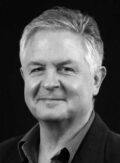 Howard Jones is a former senior officer in the British Armed Forces, serving 16 years in a variety of roles for the Ministry of Defence, United Nations, and Foreign and Commonwealth Office attaining the rank of squadron leader in the RAF and major in the army. After leaving the military he made a successful transition into business leadership.
Howard’s passion for conservation began early in his career, and has been a primary driver in choice of vocation. He spent a decade with the Eden Project as Director of Development, leaving behind a legacy of resilience, collaboration, partnerships and growth. During this time he orchestrated strategic development, innovation and major programmes that helped steer the organisation towards a sound commercial future, based upon a mix of huge public support, institutional investment and policy impact.
Most recently, Howard has served as CEO of Born Free. Implementing the first organisational vision and strategy for the organisation, and delivering a five-year operational plan, he shaped the business and culture development and improved revenue performance, supporter numbers, and brand awareness. As well as driving policy efforts at the CITES level and the UN Convention on Biological Diversity, he also initiated conservation bonds as a model of institutional investment, and streamlined operations across four global offices to increase operational effectiveness and drive results.
Mike Geldard OBE
 Mike Geldard OBE has spent his entire working life as a Commissioned Officer in the elite Royal Marines. He also gained a Masters in Business Administration (MBA) in 2003 from Cranfield University. Promoting rapidly through the ranks, he gained his colonelcy in 2008. In 2012 Mike was appointed as the Commanding Officer of Commando Training Wing at Commando Training Centre Royal Marines, Lympstone, Devon, where he led young men and women on huge personal voyages of discovery as they tried to attain Commando status. He humbly summarises this period as enabling high performing individuals to lose the word ‘can’t’ from their lexicon and replacing it with the word ‘can’. Couple this with creating an environment where understanding the importance of teamwork and becoming outstanding team members became the cornerstones of his leadership.
Following his time at Lympstone, Mike’s further senior appointments included a three-year loan service period to the Kuwait Ministry of Defence. He completed his final role in public service for the Foreign, Commonwealth and Development Office as a Diplomat in Southern Africa. As the British Defence Attaché, Mike’s area of operations covered Zimbabwe, Zambia, Malawi, and Botswana, where he was recognised as one of the UK’s leading experts in countering the illegal wildlife trade and improving human relationship with nature garnering international acclaim. Mike was awarded the OBE for his conservation work in Africa in the Queen’s 2020 Birthday Honours list.
Mike has a penchant for outdoor and adventurous training with a lifelong love for keeping fit, including swimming, cycling, running and workouts in the gym. On leaving the military, after a full and varied career, he co-founded specialist adventure travel company Wildnis (www.wildnis.co.uk), providing bespoke and unique experiences for discerning adventurers.
Mark Christie OBE
 Brigadier (Retired) Mark Christie has recently completed a full Army career, initially in the Parachute Regiment and then latterly as a General Staff Officer in various operational, training and defence engagement roles. He has a strong track record of delivering key objectives at strategic reach, in uncertain and challenging conditions and often at short notice. Mark has wide experience in East Africa, South Asia, the Middle East, Western Europe and the Balkans, including a three-year secondment to the Foreign and Commonwealth Office.
Following training at the UK’s Royal Military Academy Sandhurst and the Parachute Regiment Depot in Aldershot, Mark was commissioned into 1 PARA as a Rifle Platoon Commander in 1988. He subsequently held various appointments at Regimental duty in all three regular Parachute Battalions, and he was also a Platoon Commanders’ Division tactics instructor and officer commanding the Sniper Division at the School of Infantry.
After attending the Advanced Command and Staff Course (ACSC), Mark deployed to Kosovo as part of the Allied Rapid Reaction Corp HQ’s Forward Planning and Liaison Team in 1999. Two years later he returned to Macedonia as Officer Commanding D Company 2 PARA, shortly after which he deployed to Afghanistan as commander of the lead company of the UK’s initial entry force. His sub-unit quickly dominated the South Kabul area of operations, defeating insurgent forces and securing its non-combatant population, following which he was awarded the MBE.
In 2003 Mark was Second in Command of 3 PARA for the invasion of Iraq, and then in 2005 he was appointed Commanding Officer of 1 PARA where he integrated assigned Royal Marine and RAF elements and then transformed the 750-man unit’s structure, operating model and readiness cycle to support specialist operations in Iraq and Afghanistan. He was made an OBE shortly after.
After leaving Regimental Duty and a spell as Directing Staff at ACSC, Mark was appointed Chief Combined Joint Operations Centre for the Commander of the International Security Assistance Force, General Stanley McCrystal, in the NATO HQ in Kabul, Afghanistan. He then spent a short period as Assistant Director Warfare Development at the Land Warfare Development Group, before taking command of the British Army Training Unit in Kenya for two years. After a year as Assistant Chief of Operations at the French Rapid Reaction Corps HQ, Mark returned to Kenya for three years as Defence Advisor to the British High Commissioner.
Mark’s final role in the Army was as lead for Cadets where during his tour, and in cooperation with the Department for Education and MOD, the number of Combined Cadet Force units in schools was doubled, with new units focused on areas of high deprivation and isolated and BAME communities as part of HMG’s strategy to afford opportunity, improve social mobility and reduce knife crime, truancy and gang culture among young people.
Jérôme Servot
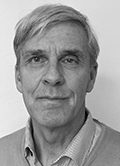 Jérôme Servot, native of France, developed a career in defence and security environment following his graduation in 1980 from an MA in business law.
Initially trained as an armored cavalry officer, his military experience was mainly devoted to intelligence and special warfare. His career saw him operating in a wide range of countries and contexts – though he always retained a soft spot for the Asia Pacific and Eastern and Horn of Africa regions – reaching the rank of Lieutenant Colonel.
A career highlight included serving as a country representative in a multilateral peace keeping mission after the first Gulf conflict, based in Zakhu and Iraqi Kurdistan under US-Turkish co-command along with a British counterpart (1994-1995).
Following staff and language staff college (Turkish), senior appointments at the Ministry of Defence followed, included leading an intelligence service specialised on crisis areas.
After leaving the military in 1998, he worked his way through the security industry, gaining initial experience in public transport but following that working mainly in the oil and gas sector; a 15-year career with Total allowed him to gain a wide range of experiences such as setting up business in South Sudan, managing regional security for North Africa and Sahel – in charge of handling the Arab Spring crises in Libya, Egypt and Tunisia – and also for Asia Pacific, based in Singapore (2015-2018).
His appetite for outdoor activities is chiefly focused on mountaineering and diving, while his interest in animal conservation has grown during his stays in Eastern Africa, mainly in South Sudan, and has been maintained through various regional contacts in the animal protection world.
Andrew Jackson
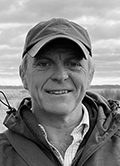 Andrew Jackson was a Parachute Regiment officer for 30 years, predominantly in high readiness contingency forces and including extended exchange service in the US and Pakistan. He completed multiple operational tours in Northern Ireland, Iraq and Afghanistan.
Andrew’s expertise is in leadership and operational management in demanding circumstances, from bespoke small teams to complex, strategically-focussed organisations. He has refined planning skills and a track record of building operational structures at pace. His final appointment was Deputy Commander 16 Air Assault Brigade, responsible for training and force preparing the UK’s Global Response Force, a high readiness strategic asset of 4500 personnel.
Andrew also has career-long experience in training delivery and assurance; from being a Brecon instructor in his youth and conducting peace support training in the Balkans to later having responsibility for all Para and Gurkha recruit training and Airborne Forces selection, then leadership of a team to validate UK’s specialist contingent force HQs and finally two senior training commands in Afghanistan, latterly of the UK’s flagship officer academy in Kabul for which he was awarded a QCVS.
Since leaving the Army, Andrew has been a COO in the financial sector. He is a trustee of the Alex Fairey Memorial Fund, which gives outward bound opportunities to soldiers and disadvantaged youth, and a former trustee of both the Parachute Regiment Charity and of the Airborne Forces Museum at IWM Duxford. He speaks Urdu and Hindi.
Andy Parkin
 Andy Parkin is a world-renowned English mountaineer – one of the world’s leading solo climbers and an award-winning artist with a deep respect for the natural world. In the summer of 1984, Andy’s life took a dramatic turn. At age 29, during his mountain guide training, while taking a client on a climb in the Swiss Alps, the rock he was climbing broke.
He sustained horrific injuries, and his life hung in the balance. Through exceptional fitness and belligerent determination, Andy fought against the odds and survived; a long rehabilitation followed.
Unable to climb, Andy rediscovered and rekindled his love of painting and sketching and an interest in sculpture. Gradually, he also rediscovered his ability for cutting-edge climbing.
Despite permanent disabilities, Andy reached wider recognition in 1994 by winning the Piolet d’Or – mountaineering’s highest honour with Francois Marsigny for his epic climb in Patagonia on Cerro Torre – one of the greatest survival stories of modern mountaineering.
His climbing and art have matured into a comprehensive, diverse creative practice touching many subjects and themes. Andy’s sculpture often uses found objects and site-specific installation, depicting places, people and ecosystems under threat. Major sculptural commissions and solo exhibitions indicate his mature creative voice, one of the most authoritative in his field.


