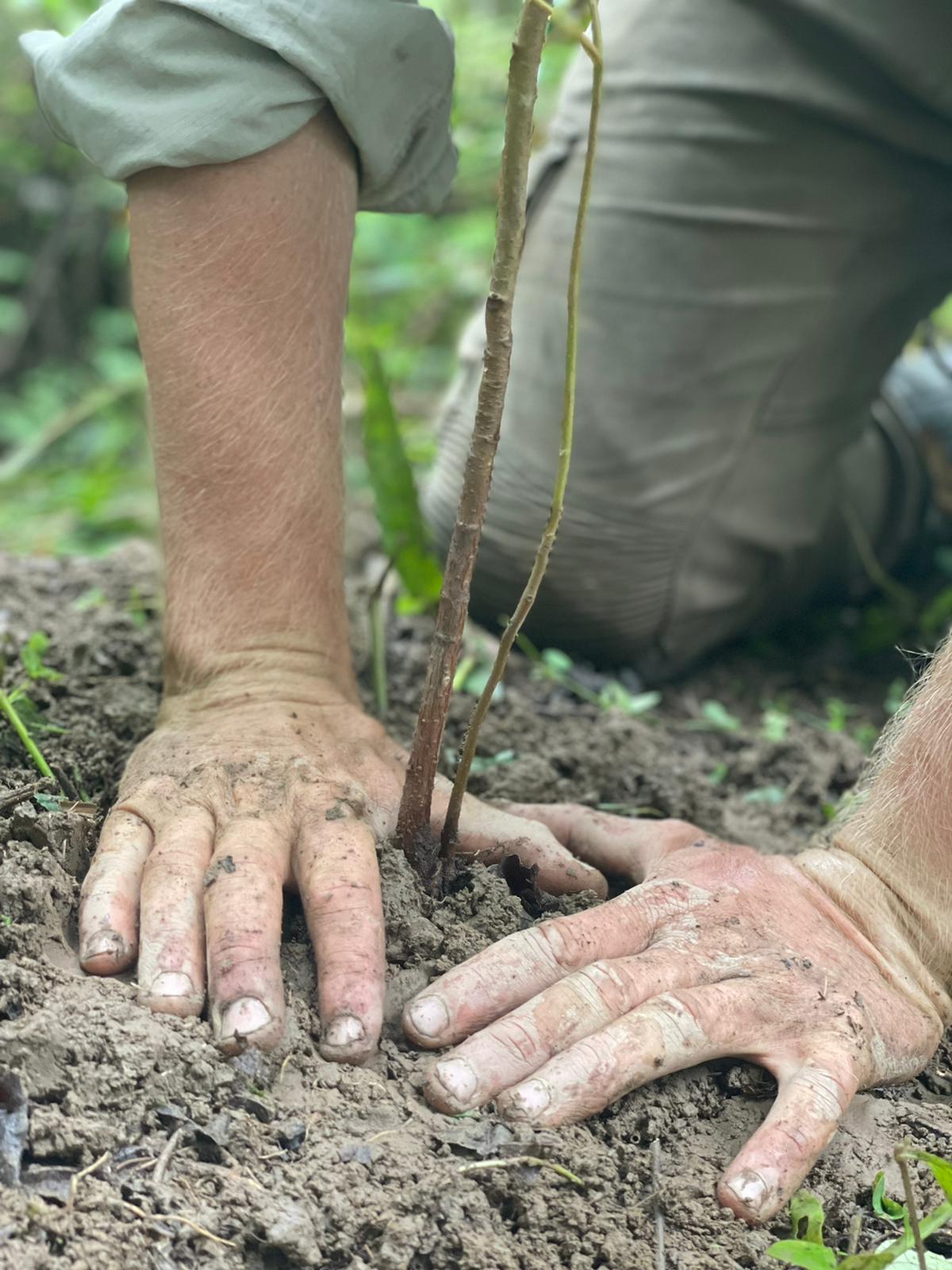
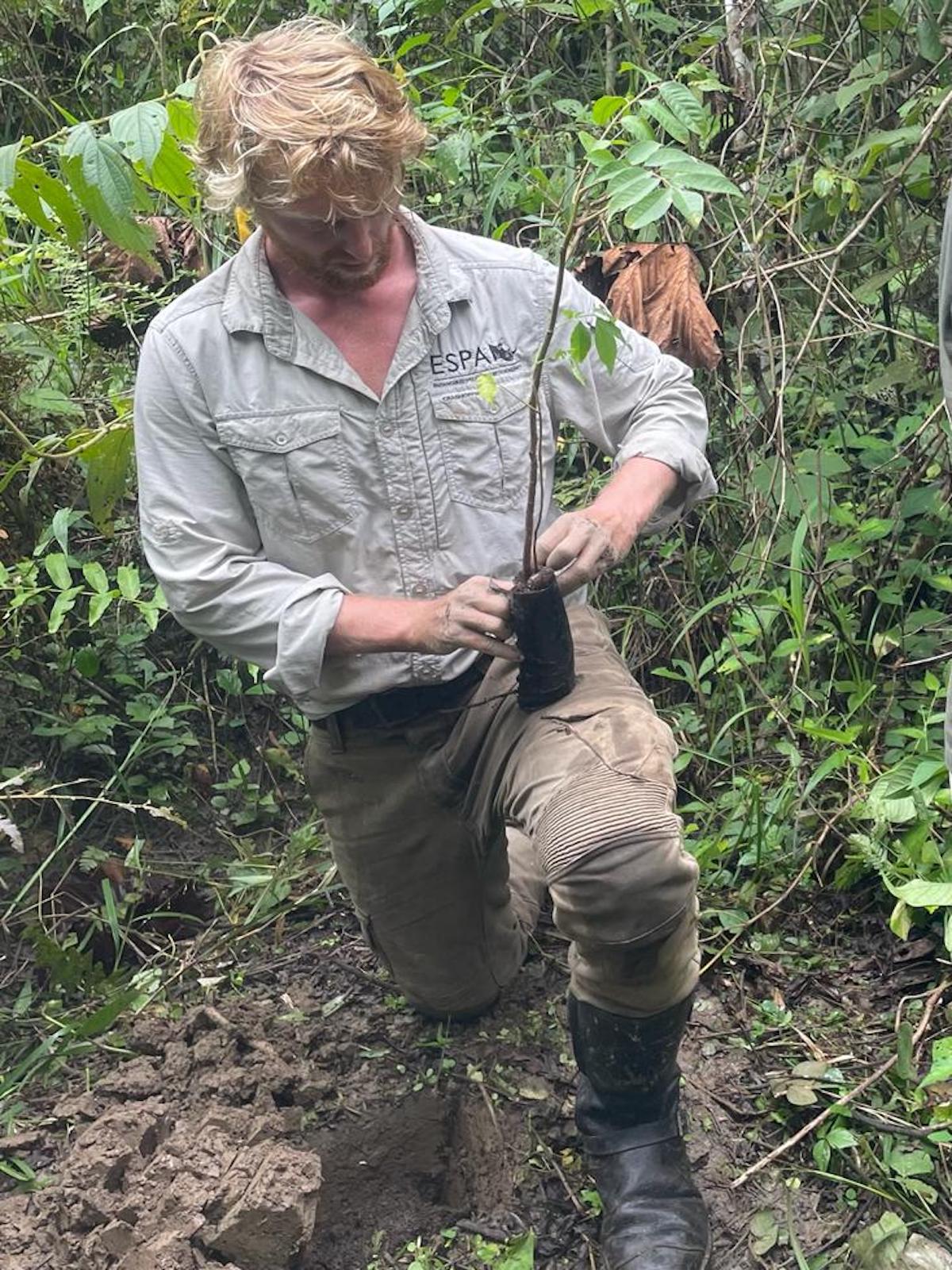
The ESPA Latin America team was in Central Columbia last week, assisting with planting hundreds of native trees in the establishment of a rehabilitation and rewilding centre, specifically for primates seized from the illegal wildlife trade.
Illegal Wildlife Trade
There has been a 94% drop in animal population sizes across Latin America from 1970 to 2020[1]. Deforestation, mining and the illegal wildlife trade are major contributors to this huge decline.
Colombia is one of three centres of the illegal wildlife trade in the region, along with Brazil and Mexico[2]. Moreover, the trade of animals is Colombia’s third largest illegal industry after drugs and human smuggling[3]. The national police have identified the key wildlife trafficking routes from Colombia to countries in North America, Europe, and East Asia[4]. In addition, these pathways foster the illegal pet trade that targets Birds of Paradise, reptiles and primates.
Of the 38 primate species in Colombia, 21 are Endangered. Despite Colombia’s efforts to counter poaching and disrupt the trade, it remains large scale. As such there are not enough sanctuaries to house reclaimed primates. Many have become habituated to sheltered lives with food provided. As a result, most have psychological and behavioural issues that make it difficult to rehabilitate. Therefore, sadly, lots do not survive release or have to be put down.
Rewilding primates
Fauna Libre is a Colombian charity beginning a rehabilitation and reintroduction program for primates seized from the illegal pet trade. Project leader, Dr Monica Ramirez, has worked extensively with primates and specialises in rewilding Woolly monkeys in the Andean region of Colombia.
The team is enhancing an isolated area of secondary forest by planting a diverse range of native fruit and climbing trees, creating a bespoke nursery that caters for primates, helping them recover and form functional troops. After that, they are ready for release into Colombia’s national parks. Importantly, the project aims to build a better understanding of the illegal pet trade and work with local communities.
Fauna Libre invited the ESPA team to get their hands dirty, carrying saplings into the dense forest, preparing space and planting them. It is a rigorous process, deciding on the appropriate site for each species of the hundreds of trees. Not to mention the constant challenge of working in the forest, with lots of eyes in the canopy watching. In summary, it was a pleasure to work with Fauna Libre, and we look forward to seeing the fruits from the new trees enjoyed by the many primates passing through the centre. This type of activity is essential support in combatting the illegal wildlife and pet trades, managing the impact of successful investigations and giving the individual animals caught up in these trades a second chance.
References
[1] https://f.hubspotusercontent20.net/hubfs/4783129/LPR/PDFs/EN-GLISH-FULL.pdf
[2] https://www.traffic.org/site/assets/files/14510/routes_taking_off_report.pdf
[3] https://www.nytimes.com/2019/04/30/lens/trafficked-animals-colombia.html
[4] https://www.policia.gov.co/file/6537/download?token=O1CZh3nX